

One line of questioning that the poker community loves is whether something is good or bad for poker. There are discussions every week on social media that pose this question and there are a few people who are responsible for a lot of the “good for poker/bad for poker” chatter. Matt Berkey, Daniel ‘Jungleman’ Cates and Daniel Negreanu frequently raise the question, on a variety of topical issues.
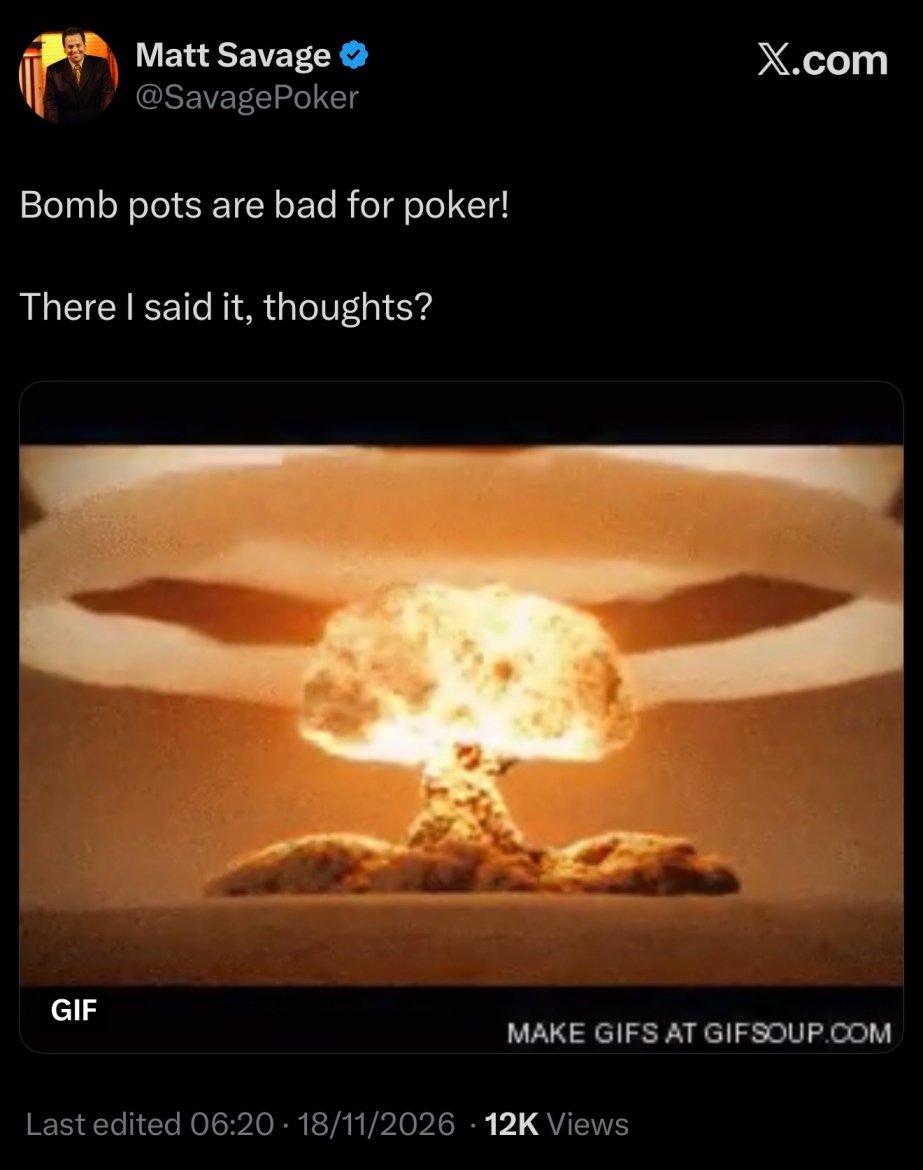
The latest person to take to social media to pose the age-old “is this good/bad for poker” question is Matt Savage. But the WPT tournament director didn’t actually ask this question, he weighed straight in with his opinion. In a post on X on November 18th, 2026, he stated
“Bomb pots are bad for poker!”
inviting others to debate the stance.
Like any discussion on the internet, there was no consensus. Some responders like bomb pots, others don’t, but there is more to it than a simple yes/no discussion. Bomb pots can be used in cash games and in tournaments and there are different ways that they can be woven into the game. To just say they are either good or bad for the game is far too simplistic.
So what are Bomb Pots?
Bomb pots are a relatively new feature, originating in cash games, but have also been used in tournaments. In cash games, they don’t apply to every hand played, usually only to the first hand after a dealer change, or at a set time past the hour. They are typically played as an Omaha hand, even if it is a Hold’em cash game table.
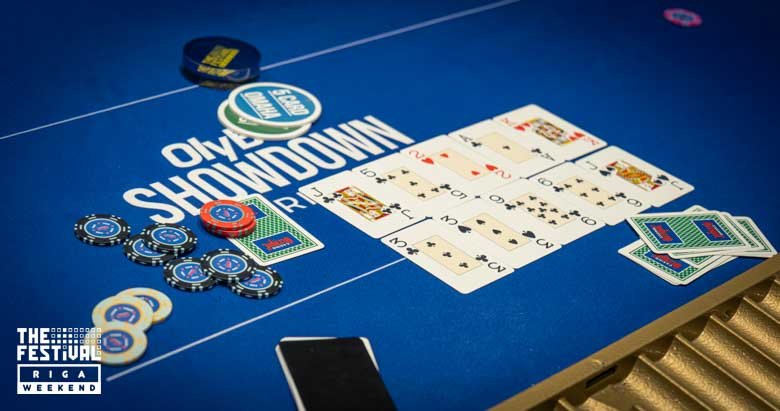
When a bomb pot hand occurs, every participating player puts in a set amount, usually equivalent to one or two big blinds, although the amount varies considerably between rooms and tables and can be as high as 10 big blinds per player. The money is put into the pot prior to hole cards being dealt. There is no further pre-flop betting and the flop is then dealt straight away. After this, the rest of the hand plays out, sometimes normally, sometimes with a double board (when two boards are dealt simultaneously, half the pot is awarded to the winning hand on each board). They build bigger pots than usual and quite often players get it all-in post-flop.
In tournaments the rules vary, some formats that use bomb pots have them every hand, while others restrict such hands to the first hand of every new level. Some do it with double boards.
Why Might Bomb Pots be bad for poker?
Although Matt Savage made a statement that bomb pots are bad for poker, he didn’t offer any further opinion as to why he thinks this. The replies to his post offer some clues.
Mason Malmuth agreed, saying:
“I’ve written that bomb pots are terrible for poker. They upset the balance of luck and skill that poker games need to perpetuate. I expect over time that those rooms offering bomb pots on every dealer change will see a decrease in the number of games they spread.”
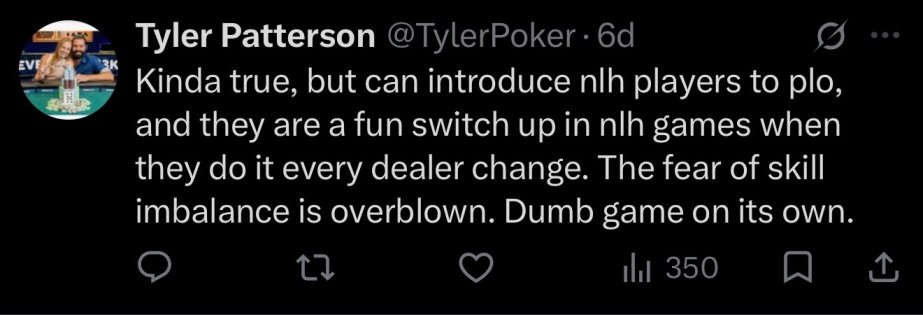
Another poster, Tyler Patterson, offered an alternative take:
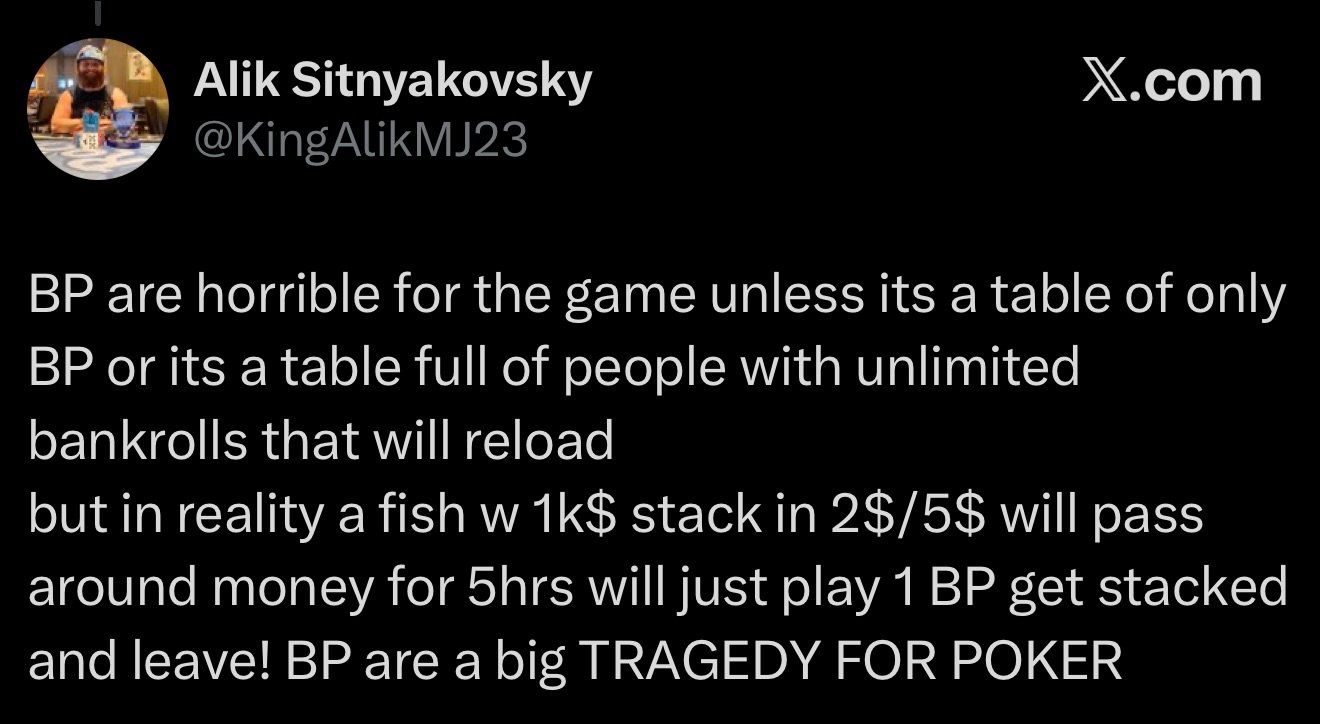
Most of the respondents tended to agree that bomb pots are bad for the game. Many argued that in the long term, they will have a negative effect on the poker economy. Alik Sitnyakovsky made one of the strongest comments:
Fun in Moderation
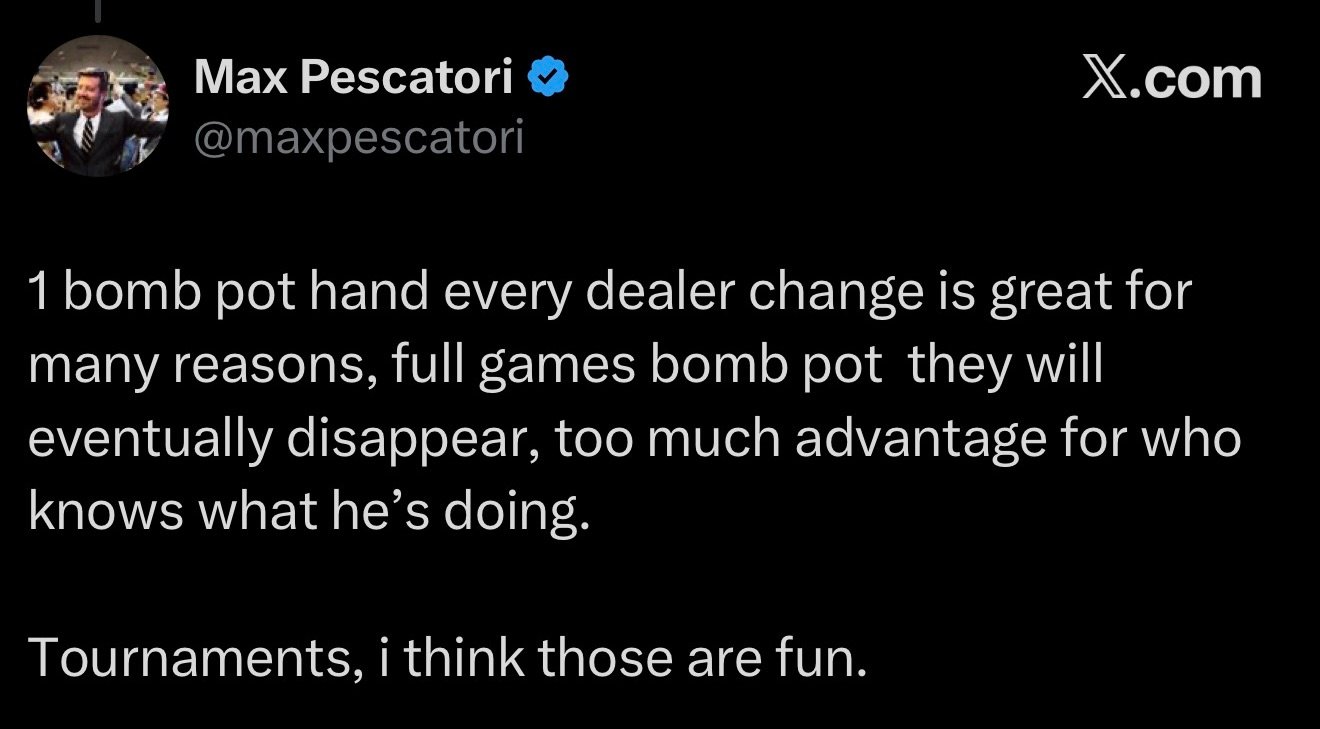
But not all agreed and some were quite favourable about the format. Max “the Italian Pirate” Pescatori’s view of them is:
Another poster, Kevinmthoughts, said:
“I’m a big fan of DBBP poker. I think it’s a great game, but not a game to mix in at dealer breaks. Especially in a NLHE game. It does break players and in turn it breaks tables and entire games.”
Further Views on Bomb Pots
Beyond Matt Savage’s thread, Poker Exclusive spoke to a number of players to ask their opinions of bomb pots.
- Sherry Pluskota: a poker player who hosts regular poker-related discussions on her X Space
- David Lappin: a poker player, journalist and host of The Chip Race podcast
- JJ Hazan: a poker player and operator of the PLO Masters series
- Sam Acheampong: a poker player and an ambassador for the PartyPoker Tour
- Martin “Franke” von Zweigbergk: a poker player and operator of the mixed-game-focused series known as The Festival.
As per the discussion on X, views are divided.
Player Choice and Compulsory Participation
Recently, Sean McCormack, Executive Director of Poker Strategy & Development for MGM Properties, joined Sherry Pluskota’s X Space podcast for a discussion about Bomb Pots. She told Poker Exclusive:
“We had a great discussion with audience members on the topic, with Sean giving us an insider’s look. It was a bit surprising that many are opposed to bomb pots. All were opposed to the bullying that sometimes surrounds them.”
“The fact that bomb pot hands take a lot of time to play is a negative as well.One thing that everyone could agree on, was that poker rooms should offer tables without bomb pots to allow the customer to decide what to play.”

Sherry’s personal opinion of bomb pots is also negative. She explained:
“I’m a no-limit player and don’t want to play the carnival games known as bomb pots. They are a waste of my time at the table for I certainly didn’t belly up to the felt to sit around and watch others play, nor to be bullied. If someone wants to play PLO then go play it, I showed up to play no-limit, so let me play it.”
Sherry’s comments encapsulate one of the main points of contention when it comes to bomb pots, when applied to cash games – that when bomb pots occur on No Limit Hold’em tables, they are most commonly played as an Omaha hand. Interrupting the regular format of a game to play occasional hands of another variant reduces the choice for players seeking pure Hold’em cash game tables. Many players may take part reluctantly in bomb pots, if there are few tables available without them. In the short term many may put up with this rather than have no game at all to play.
Variance and Skill
David Lappin highlights another negative aspect of bomb pots (in cash games):
“Bomb pots obviously skew the variance within a session of poker. It will often be the case that the biggest pots of a night emanate from those hands. Weaker players will usually play multi-way more poorly so playing bloated pots 9-ways is a recipe for disaster for them. Poker is a game of skill and I want to see pros win but I’m not a fan of creating conditions where amateurs get fleeced.”
What David is highlighting is an apparent contradiction, in that bomb pots are seen as being very gambling-oriented, but in fact, pros can not only retain their edge, but increase it, when playing against inexperienced and amateur players. Overall, on the question of whether bomb pots are bad for poker or not, David says:
“I am inclined to agree with Matt here but I would add one caveat: if the weaker players at the table really want to include the occasional bomb pot for the sake of fun or ‘a bit of a gamble’, then I think the stronger players should acquiesce. I definitely don’t think that the card room should mandate them as part of the game.”

Cash Games v Tournaments
David’s comments related to bomb pots in cash games. On bomb pots in tournaments his thoughts are more straightforward, saying that they are:
“Stupid and no fun”
JJ Hazan’s views on bomb pots are more positive, particularly in relation to cash games, on which he comments:
“I think double board bomb pots are a wonderful variant within cash games (NLHE/PLO) as its spices up the game every time there’s a dealer change.”

His views on tournaments are a little different, highlighting that bomb pots can be applied to tournaments in different ways:
“I feel that a whole tournament of it (I have played one!) can get a little repetitive and relies more on luck than skill, so that’s not for me. However, I don’t mind it being added it into PLO Tournaments as an occasional bit of fun. As long as it’s voluntary and not mandatory!”
Sam Acheampong’s views align closely with those of JJ’s, seeing them as an occasional bit of fun:
“Periodic Bomb pots, especially 6 card PLO are a fun addition to any cash game! As someone who is pretty risk accepting, I enjoy how the dynamic changes because of the perceived ‘Dead Money’.…. Unless I’m on the wrong end! 😅 That being said, too many in a short space of time can spoil a game!”
Sam has not yet played a bomb pot tournament, but plans to soon, during the PartyPoker Tour London stop in December.
Bomb Pots as Entertainment
While most of the discussion about bomb pots focuses on cash games, Martin ‘Franke’ von Zweigbergk, the founder of The Festival Series, spoke about them purely from a tournament format perspective. He said:
“I believe that we need to have more fun at the table. Times are over that we need to make poker so serious. Hoods off, glasses off, headphones off, talk with a neighbour, it’s entertainment.”
“Yes there are some professionals out there and for them it’s life and death, it’s an income, but for the Festival Series, we are here to have fun and we try to gamify as much as possible. One way to really gamify poker is to have bomb pots. There’s more action, players are engaged in the hand and it’s a very popular format. We have a lot of laughs a lot of action and a lot of quite tough bluffs, so bomb pots are here to stay, at least at The Festival.”

Bomb Pots are Here to Stay
It’s a discussion that will likely rumble on for a long time. Why? Because rooms that are offering bomb pots are unlikely to stop doing so and some event operators, like Martin ‘Franke’ von Zweigbergk are committed to continuing to run bomb pot tournaments. The underlying reason for this is demand. If demand didn’t exist, there would be little incentive to offer them. As we have seen with formats such as mystery bounties, popularity and perceived benefits to the game don’t necessarily go hand in hand.
Nevertheless, sometimes good things can be overdone. We’ve all had one too many chocolates at Christmas time. We’ve all fired an extra bullet when we shouldn’t have. Moderation is the key. If some rooms are stifling player choice by introducing bomb pots at too many of their tables, particularly Omaha bomb pots in Hold’em games, that’s a different matter. It becomes more like someone forcing that extra chocolate down your throat or encouraging you to have the rebuy that you knew you shouldn’t have.
There is also something of a paradox in that bomb pots are perceived as being more gambling-oriented, yet they can actually increase the advantage that experienced players have over less experienced ones. Greater variance doesn’t necessarily equate to a reduced skill edge.
The lack of economic sustainability argument has some merit, but it also needs to be put into perspective. There are many things in poker that have a negative impact on the poker economy, not least rake and tournament fees. While bomb pots may accelerate the rate at which money changes hands, rake and fees take money out of the game altogether. Yet operators often seem to get more of a pass on this than they do on experimental formats like bomb pots. It’s arguably a rather convenient distraction for operators when their customers are more concerned about the impact of the format than the pre-existing cost of playing poker.
The biggest takeaway from the topic seems to be that whether bomb pots are good or bad for poker is context-driven. In cash games where player choice is restricted and less experienced players are put in uncomfortable situations that favour the regs, it’s hard to argue that the balance is quite right.
When it comes to tournaments, providing the format is clearly advertised in advance, it’s much more a question of personal choice. Like many tournament format variations, it’s a twist, a gimmick. Some will like it, others won’t. We shouldn’t lose sight of the fact that poker is also a form of entertainment and there is nothing inherently wrong with introducing formats that people find fun.
Perhaps the question we should be asking is not whether bomb pots are good or bad for poker, but whether the way in which they are being implemented is correct or not?