

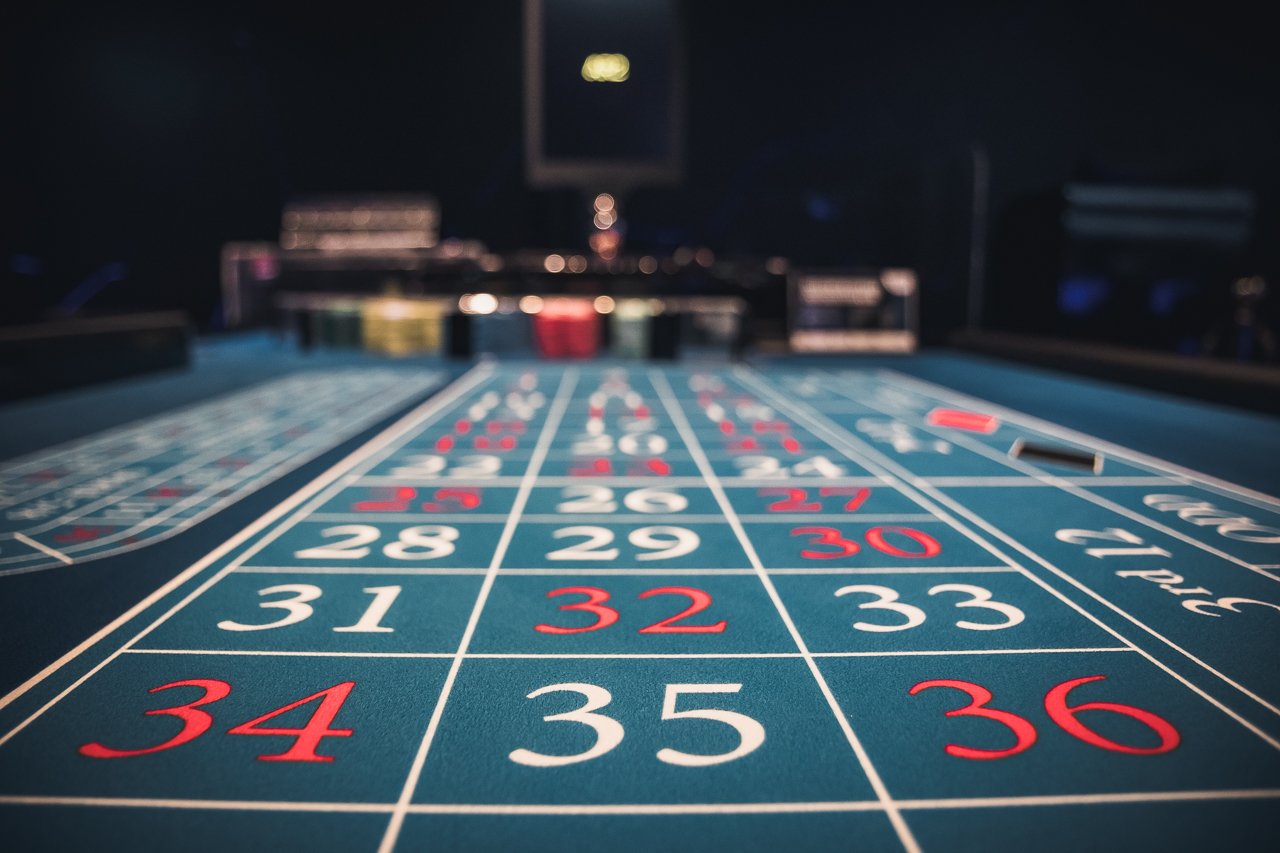
 Gambling comes with taking risks. And risk is something very hard to quantify instinctively for the monkey brain. It takes quite a bit of monkey studying to start understanding some of the crazy mechanics at work. So much so that game theory fundamentals still govern basic mechanisms in modern economics and statistics today. Hedge funds do nothing else but estimating and managing exposure to risk in markets. A gambler is a small hedge fund, doing business on tables instead of markets and maybe with a cocktail in his hand surrounded by flashy decoration with a smell of carpet deodorant.
Gambling has always carried risk but the way we gamble has changed dramatically lately and so has the risk that comes with it.
Not that long ago, gambling required effort. Going to a casino, finding a bookmaker, buying a lottery ticket or otherwise make a conscious decision to participate. There was a decent amount of friction between the impulse to gamble and actually putting money on a table.
Today, that friction has almost disappeared.
Smartphone put casinos, sports books or poker tables in our pocket 24 hours a day. We can go from thinking ‘Maybe I’ll place a bet’ to actually risking money within seconds. Commercially and technologically speaking, a great leap forward. The shareholders love it but this progress matters enormously when we talk about problematic gambling too.
People have probably not suddenly become more risk aware but the gambling environment itself has changed a lot and, obviously, added additional layers of risk (a.k.a. fun). Modern gambling is faster, more accessible, more personalised and much harder to escape for those who are vulnerable or trapped.
Nobody cares
The former inconveniences creating time between the impulse and the action were multiple occasions to cool down and reconsider. On top of the speed of things, another major change is the sheer number of opportunities to gamble. A traditional sports bet might have involved choosing a winner and waiting several hours for the game to finish.
Today, that same sporting event can become a continuous sequence of betting opportunities: bets before the game, during the game, during breaks or even on individual actions with live odds constantly changing, creating another reason to place another wager.
Parlays in sports betting or turbo re-entry poker tournament structures, the vibe is similar. Combining multiple outcomes creates the possibility of a much larger payout while making the probability of winning smaller. Smaller chance of win = more risk. Nobody cares.
For somebody chasing losses, this can be dangerous because it opens the gates wide open to the cruelest aspects of gambling addiction: the belief that the activity and attitude that created the problem can present itself as the solution to the problem. This stands in glaring contrast with alcoholism or drug addiction where people rarely think they can solve their addition problems by consuming more stuff. Problematic gambling tries to convince one of precisely that. Absurd, yes! Yet, surprisingly convincing while in full monkey mode.
Gambling brands set no trap, they hunt
Most people are not weak. They are mostly unaware and unprepared. They are mostly minding their own business living life but modern gambling brands don’t simply wait for customers to decide whether they want to gamble. They are not setting traps. They are hunting. They actively roll out an arsenal of tricks to try to bring customers back with bonus bets, deposit matches, profit boosts, cashback, loyalty programs, VIP treatment, personalised promotions…
One might not have planned to gamble for a while. Then a notification announces that a bonus is waiting and that offer expires tomorrow.
For someone vulnerable to gambling addiction, that can be enough to restart a bad cycle. Like a questionable friend how offers you cigarette one night although he knows you qui two years ago.
The logic quickly becomes uncomfortable ethically speaking: the more money someone loses, the more valuable that customer can become to the industry.
Gambling as a culture
Gambling companies are companies. And companies want to make money. Nothing new. Perhaps the biggest change is cultural. Financial trading platforms are more popular than ever. That’s investing, not gambling. A skill thing. The fact that risk taking is no longer presented as something separate from sports or finance changes the social perception. Odds appear during broadcasts, commentators discuss spreads and parlays, teams, leagues, athletes, podcasts and media companies actively work with or even as gambling brands with crypto trading exchanges happily mingling in the industry, and betting being done in casinos, on sports, on Bitcoin futures trading, on tokenised stocks, or on prediction markets for the next elections or the weather on next Thursday at 9am in Buenos Aires. Rather than what people gamble on, it seems like gambling has become the game itself and that essentially changes how people perceive risk. Many just don’t. It’s all become a game of information and odds.
A young sports fan isn’t necessarily introduced to gambling as a potentially harmful financial activity. It’s part of being a fan. And, in some cases, eventually, the relationship can reverse. Some ‘fans’ might end up not betting because they enjoy watching the game but could start watching a sport because they are looking for something to bet on. Subtle. And devastating if unnoticed or ignored.
A completely irrelevant game can suddenly become fascinating because there is money on it. Some people may find themselves following leagues in other time zones they’ve never watched before and players they’ve never heard of simply because the odds are good.
At that point, the sport itself has become secondary. The main attraction is the betting.
And then there’s Poker
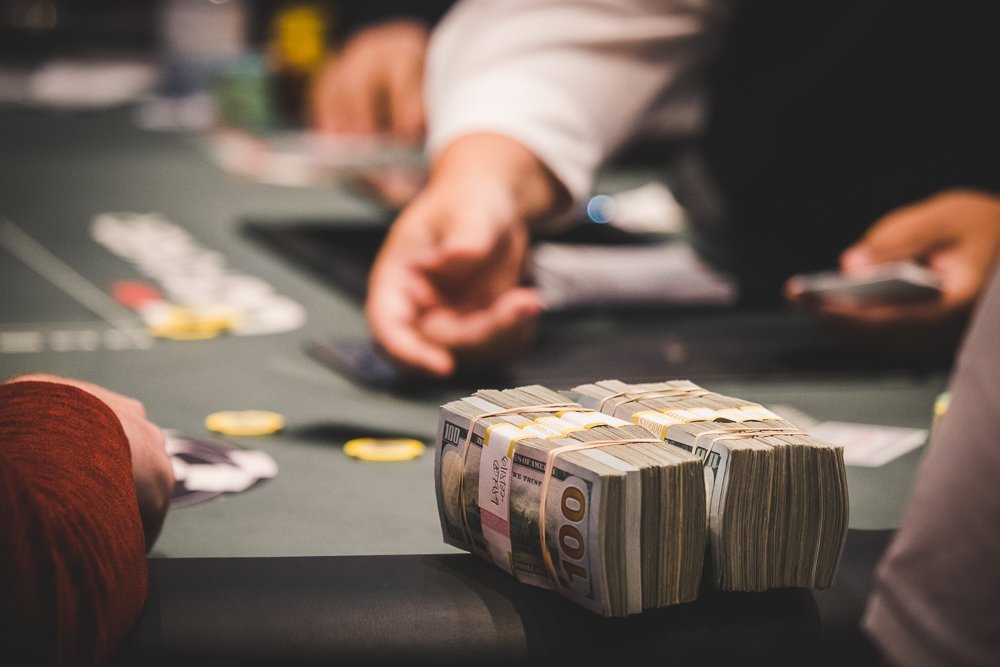 Poker players often make a clear distinction between poker and gambling. There is a legitimate reason for doing so.
Unlike roulette or a slot machine, poker involves meaningful skill. Players compete against one another, and over a sufficiently large sample, skill can have a major influence on results. The classic clean corporate talk to present to the regional gaming commission representative or the story parents, worried friends or wives keep hearing.
Skill, yes, alright. But saying that poker involves skill doesn’t mean poker players are immune to gambling psychology. Poker can still activate many of the same mechanisms that make gambling compelling: risk, anticipation, unpredictable rewards, chasing losses, emotional attachment to winning, overconfidence. All the good stuff, NOT.
Gambling as an atmosphere shows up more gently in poker but games often happen in casino environment and there are numerous stories of big winners at poker who give it all back somewhere else. The exposure to potentially bad financial decisions or bad habits is constant. Poker is usually not THE problem.
But there are can also be things at play like the gambler’s fallacy, the belief that because something has happened repeatedly, the opposite outcome is somehow becoming due. A poker player might understand perfectly well that the previous games have no effect on the probability of the next game and still ‘feel’ that the big win has to be coming. Got you! That’s gambling :-) * pointing finger *
The important distinction is that poker can be a game of skill while still triggering mechanisms associated with gambling addiction. A balanced professional poker player may approach the game as a disciplined exercise involving expected value and bankroll management. Another player at the same table may be chasing a dozen of losing sessions, desperately trying to win the money back while also having to deal with a complicated situation at work these weeks.
The cards are the same for both but the psychological relationship with the game is fundamentally different. That’s why saying ‘Poker isn’t gambling’ can become misleading because it can make it easy to dismiss gambling-related problems among poker players.
Perhaps the better question isn’t simply whether poker is gambling but what role gambling attitude is at work in the player’s relationship with poker. It’s easier for poker to get away sneakily and not participate to the addiction talks because, if poker is not gambling, there is no addiction. Right?
Digital money makes losing easier to ignore
One keeps hearing the phrase ‘It’s only plastic’ when a player decides to play a borderline hand in a poker game when throwing in the chips. As a matter of fact, switching from playing money on the table to playing chips was one of the most genius moves in terms of money value abstraction in the casino industry all in all. An even more genius move has brought an even more subtle change in the perception of money: digitalisation.
Cash has psychological weight. Handing somebody a 100 note creates a tangible moment of loss, of pain. Digital money doesn’t necessarily feel the same way. A digital deposit can eventually become abstract just like the digital money itself. This creates another dangerous distortion. ‘It’s only plastic’ becomes ‘It’s just a click’. Works even better.
The scale of the problem is changing
The expansion of online gambling has been enormous. In the U.S., the home of betting, depending on sources and ways of measuring, (legal) sports wagering income streams are reported to have grown from approximately $5 billion in 2017 to something like $120 billion in 2023. More than 20x in 6 years. During the same period, searches associated with seeking help for gambling addiction organically increased substantially too.
That doesn’t mean that every additional bettor will develop a gambling disorder. It does, however, provide a warning signal about the growth taking place. More Money, more problems, like in the hiphop hit song.
The important point is not at all that everyone who gambles becomes addicted. Most don’t. Vulnerability differs from person to person. Genetics, impulsivity, trauma, mental health and early exposure can all play a role. Far from everybody who drinks alcohol becomes an alcoholic but it’s still not a valid reason to put alcohol in all school cafeterias.
If a potentially addictive activity is made available everywhere around the clock with almost instantaneous access, endless opportunities and personalized incentives designed to bring people back, more vulnerable people will inevitably be exposed to it.
The industry needs losers but you don’t have to loose it all
Perhaps the most important realisation is also the simplest but when the monkey brain is corrupted, the simplest things don’t compute that well anymore.
It’s not necessary to lose the house, destroy relationships or empty savings accounts before gambling becomes a problem. It’s not necessary to reach some spectacular rock bottom before gambling issues are acknowledged and taken seriously.
If gambling has stopped being something enjoyable and has become something needed, if losing triggers the urge to gamble more rather than stop or if thoughts often revolve around the next bet, the next tournament, the next hand or the next opportunity to win money back, that’s probably worth examining.
On the other hand, the poker pros love to hunt the punters in the poker rooms and casinos or sports books generate a vast part of their profits from recurrent problem gamblers, which introduces a whole other set of morally questionable social and commercial practices to point at. The industry needs losers. Plenty of them, preferably. It’s not evil. It’s the business model.
Individually speaking, perhaps the most uncomfortable question a player can ask himself, is simply: ‘Why am I playing?’
Poker brands playing the game of presenting poker as a sport rather than gambling, do so because like electrons, which can behave as particles or quantum waves depending on how they are observed, poker is not inherently gambling or not gambling. It’s the Schrödinger’s cat thought experiment with a flush draw in the box instead of a cat. The outs are alive and dead at the same time. The distinction depends on how poker is played and on the mental state and intentions of the player. Poker, like the electron in the double-slit experiment, seems to reveal a different nature depending on the conditions under which it is approached: the game itself is neutral, while whether it becomes gambling depends largely on how and in what state of mind it is played.
Back to ‘Why am I playing?’
The money maybe? Again, the industry really needs losers and not being one, is hard. Even if one is part of that special minority breed of players who actually make money long-term, if the answer to ‘Why am I playing?’ is never anything like entertainment, fun or social interactions but has gradually become some escape, pure excitement, validation or the hope of fixing previous losses, then solely finding better betting strategies may not be the satisfying over all.
Gambling is not necessarily bad. It’s one way to spend money and time. Some people compulsively book city trips, others spend fortunes on visiting art festivals. Anything goes to have fun. Just like spending money on night outs or shopping, losses are guaranteed in casino games and they are also way more than just likely to happen in other more skill-related disciplines like sports betting or poker, so enjoyment, fun, competition and keeping a healthy approach become the easiest ways to extract max-value from the games. Statistically speaking, one is going to lose so often that it makes little sense to think in terms of financial profit. The reality is that oftentimes, winnings are only a volatile byproduct that will almost never represent the true expected value, in good or in bad. If winnings are the main measuring tool instead of trying to play well, improve and enjoy oneself, the journey is almost certainly going to be confusing and emotionally tiring. And potentially dangerous.
One Goliath, one thousand Davids
Modern gambling and gaming brands have become exceptionally good at giving people another opportunity or another reason to continue playing. It’s important to stay aware generally speaking and there is no shame in getting help. Gambling addiction is real but so is recovery. Many support structures or online contents exist and a serious talk with a friend can be a good start just asking for advice or sharing monkey thoughts.