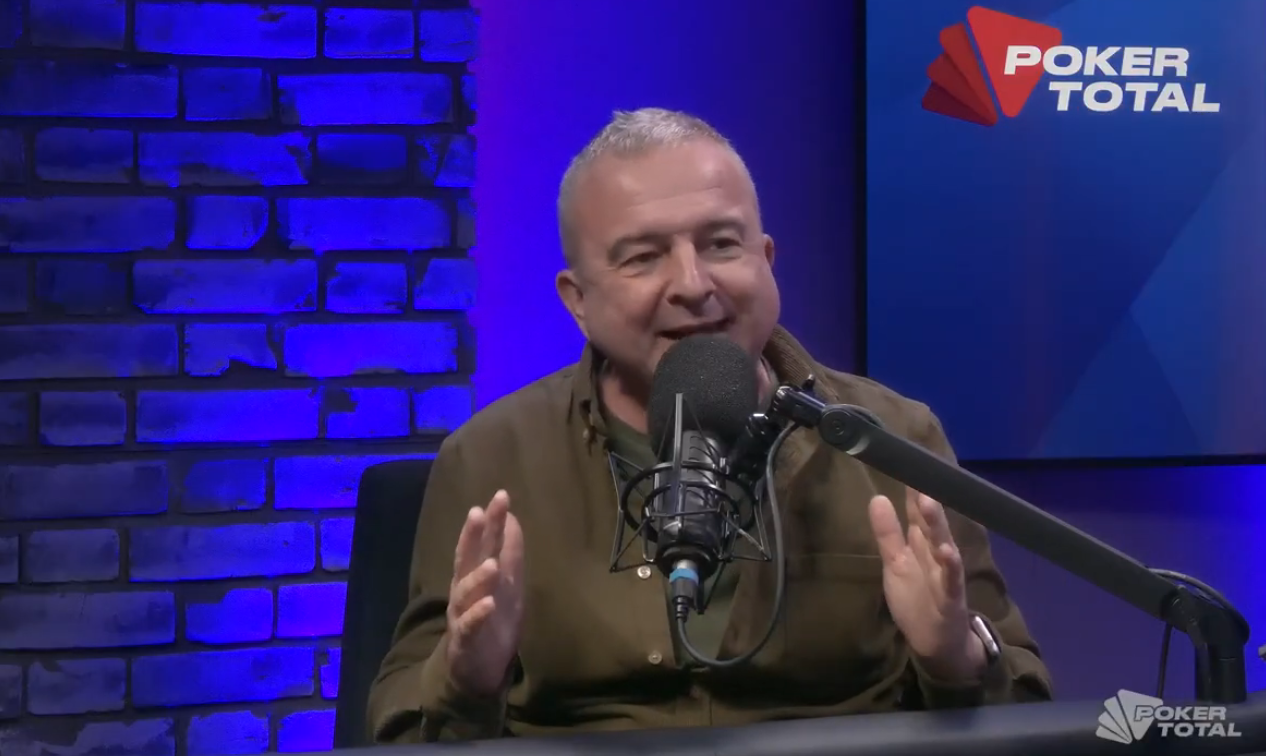
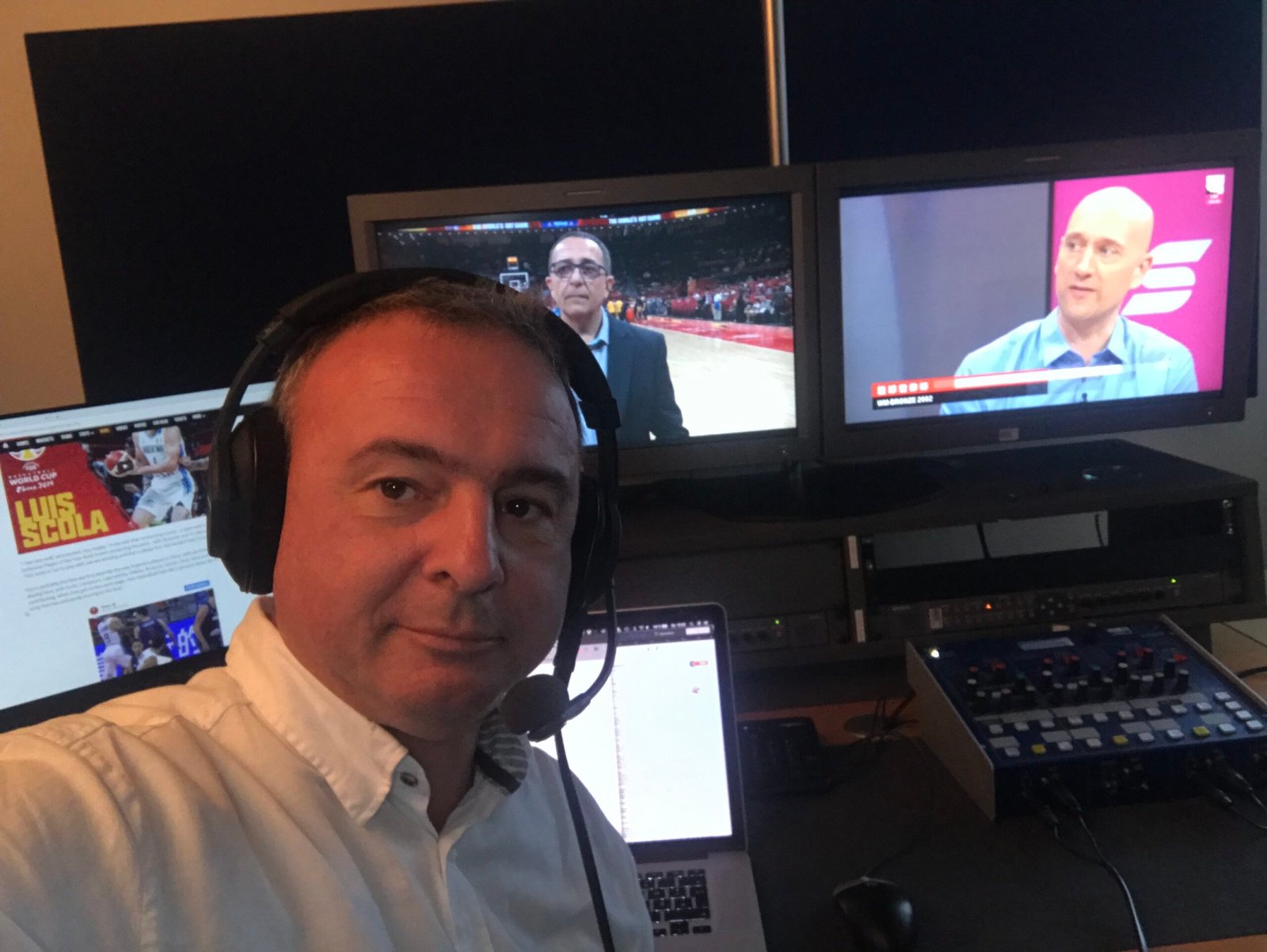
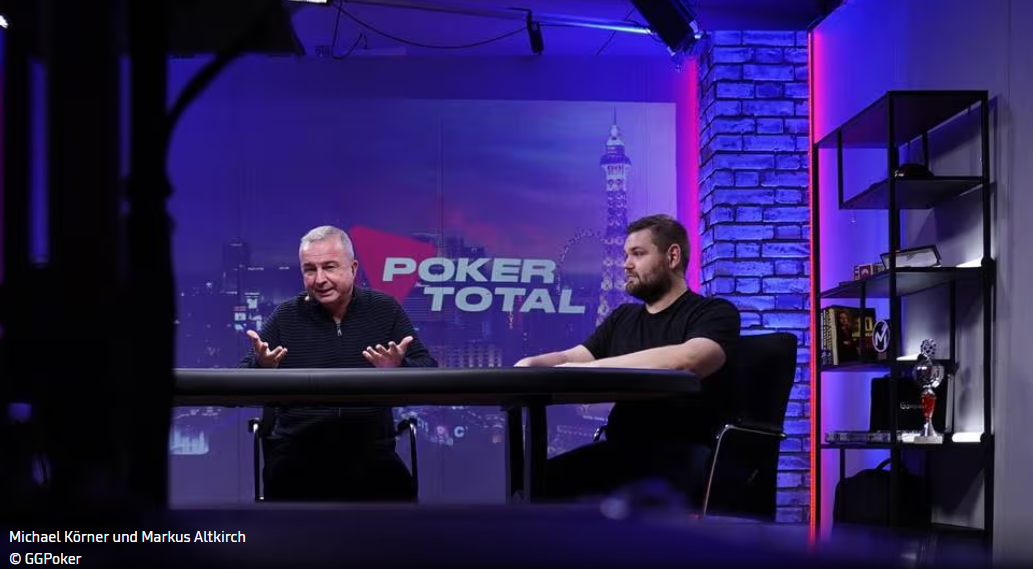
Michael Körner has been one of the most distinctive voices in the German sports and poker universe for many years. Whether it’s large poker broadcasts, Basketball Bundesliga, NBA, or the YouTube channel PokerTotal: When Körner commentates, you hear not only expertise but also passion, tempo, and that unique Körner sound, which lies somewhere between sports journalism, living room vibe, and refined escalation.I have known Michael for about 20 years now. Therefore, this conversation will not be a distant “Mr. Körner, how do you evaluate the current situation?” interview, but rather a personal exchange about poker, live commentary, special players, old companions, and the question of why poker can sometimes be both a gift and a trap for commentators.
 Potti:
 Michael, you come from Hagen, a city that has almost mythical status in German basketball. Yet for many poker fans, you have long been a recognizable voice at the poker table. How did you get into poker – was it more of a strategic game at first, an exciting TV product, or just another sport that can be narrated?
Michael Körner: In the beginning, it was more of an adventure. There was a rights package for the then DSF that included darts, bowling, and poker. The editor-in-chief at the time knew about my passion for gambling and just assigned the package broadcasts. That was in 2004. What I never understood is why bowling was never shown.
Potti: From the outside, commenting on poker sometimes seems simple: read the cards, explain probabilities, and that’s it. What do viewers often misunderstand about this?
Michael Körner: Oh, there are many things. I believe many underestimate how long these tournaments last. And that there is, of course, an element of luck, but skill is also not unimportant.
Potti: You are the lead guy of the YouTube channel PokerTotal. What makes this new format particularly appealing to you?
Michael Körner: PokerTotal is still a very small project for various reasons. In the end, I want to create a platform that reports entirely independently of the large poker world. There are so many stories, but we do not tell them.
Potti: How do you prepare for a big poker broadcast? Player profiles, past hands, table dynamics, current results – or is poker ultimately so unpredictable that you have to be prepared, but live everything turns out different anyway?
Michael Körner: Player profiles are indeed important. And also storytelling that occurs off the poker table. When Shaun Deeb invites his grandma to the Main Event or things like that. I think these stories are just as valid as ICM theories.
Potti: After thousands of broadcasts: Is there still that thrill before a live poker broadcast when the countdown runs? Or has it become pure routine?
Michael Körner: For thrill, I’m probably the wrong type. I have been covering sports reporting for 36 years now, so there comes a point where it doesn’t “thrill” anymore. However, I still have the love for the game. I find both basketball (my second pillar) and poker fantastic. I can immerse myself in both games for hours. And I always feel joy in my work, actually really always. However, I have never been nervous, so the thrill is absent.
Potti: There are poker players who make commentators cheer internally when they sit at the table. They either talk, polarize, suffer, or simply have a certain aura. Who does that for you – and why does the show automatically get better?
Michael Körner: There are several. I have always been a fan of having Phil Hellmuth at the table because then something usually always happens. I prefer players who kick off the tabletalk. DNegs, of course. In small doses, also Martin Kabrhel. Even though I enjoy watching Vogelsang and Haxton play, I’m not a fan of full face coverings. Honestly, I would also ban that. But I can also watch a good cash game for hours without much happening.
 Potti:
 After so many years in the scene, it’s not just contacts that emerge, but sometimes real relationships. Are there poker players with whom a professional contact has evolved into genuine connection or even friendship over the years?
Michael Körner: There’s still a connection to the old warhorses Heitmann and Danzer, even if we don’t see each other regularly. I’m friends with Sam Ju, a very interesting personality.
Potti: You play many online poker tournaments yourself. Is that relaxation, competitive ambition, brain training – or also a way to stay close to the game you comment on? And which variant appeals to you the most personally?
Michael Körner: Yes, I do indeed play quite a bit. In fact, I am a big fan of Mixed Games. I love 8 Game. But of course, NLHE is also played, almost always Turbo tournaments.
Potti: How close have you come to winning an online bracelet? And when you look at online poker today, with solvers, study groups, and ever-more professional strategies: has the game become more exciting and challenging for you – or sometimes harder to narrate?
Michael Körner: I was 13th and 16th in the Sunday Million a few years ago when it was still larger. I haven’t played for an online bracelet yet. I find the thing with solvers very exciting and I engage with it extensively. However, I don’t do my own analyses with it.
Potti: You also play chess. Does that help with poker – or is that more of a romantic notion from people who like to intellectualize both?
Michael Körner: I don’t think it helps in poker. I simply love strategically inclined games. And I am also driven by the ambition to improve.
Potti: Now, please don’t sidestep diplomatically: What do you personally prefer to comment on? And if you had to choose between a perfect evening – Game 7 of the NBA Finals or the Final Table at the WSOP Main Event?
Michael Körner: I don’t need a second to think about that. Of course, Game 7 of the NBA Finals. It’s one of the biggest things in sports.
Potti: How should poker be narrated in the German-speaking world today to retain more people’s interest? Does it need better streams, more personalities, more entertainment, more beginner formats – or simply larger stories and characters like a Phil Ivey, Gus Hansen, or Phil Hellmuth from back in the day?
 Michael Körner:
 Oh, that is a very complex topic. Personalities and characters are, in my opinion, very important. But for various reasons, younger players are withdrawing significantly from the public eye. Or they see no advantage in standing in front of a camera. A German player at the WSOPE said to us, what do I gain if I give you an interview? That makes it difficult. Such players forget that good broadcasts also contribute to having tournaments played abundantly. I am also a fan of clear athletic structures. For example, I do not see the EPT as competition to the WSOP. But behind that, there are competing online platforms. That then leads to a certain cannibalization.
Potti: Technical glitches, laughter fits, wrong names, escalating players, completely absurd poker scenes: what is the most curious thing that has stuck with you over the years during a poker broadcast?
Michael Körner: I think you’d agree with me. The very long livestreams are what stick in memory the most. You’ve managed those significantly more than I have. I also think fondly of our productions of “German Highroller.” That was highly professional produced, unfortunately also very expensive, but unbelievably fun. It’s only later you realize how much fun it was.
Potti: You and Frank “Buschi” Buschmann – you both come from Hagen, even attended the same school, similar paths – yet very different styles. You once said he has always been the more offensive one. In commentary, with the ladies, and probably even when entering a room. Was Buschi already Buschi early on?
Michael Körner: I would say a clear yes. I have known him for 40 years. And even if he were to say now, “I’ve become much calmer,” I would reply: maybe, but you’re still Buschi.
Potti: We’re coming to an end. No wisdom, no three tips. Just one single sentence: What must someone understand if they want to become a commentator and truly excel in this profession?
Michael Körner: You must stay 100% true to yourself. Being authentic is the be-all and end-all.
Potti: And of course, obligatory final question: Tonight the NBA Finals begin. The San Antonio Spurs are facing the New York Knicks. Who takes it?
Michael Körner: San Antonio Spurs in 6.



 Potti: Michael, you come from Hagen, a city that has almost mythical status in German basketball. Yet for many poker fans, you have long been a recognizable voice at the poker table. How did you get into poker – was it more of a strategic game at first, an exciting TV product, or just another sport that can be narrated?Michael Körner: In the beginning, it was more of an adventure. There was a rights package for the then DSF that included darts, bowling, and poker. The editor-in-chief at the time knew about my passion for gambling and just assigned the package broadcasts. That was in 2004. What I never understood is why bowling was never shown.Potti: From the outside, commenting on poker sometimes seems simple: read the cards, explain probabilities, and that’s it. What do viewers often misunderstand about this?Michael Körner: Oh, there are many things. I believe many underestimate how long these tournaments last. And that there is, of course, an element of luck, but skill is also not unimportant.Potti: You are the lead guy of the YouTube channel PokerTotal. What makes this new format particularly appealing to you?Michael Körner: PokerTotal is still a very small project for various reasons. In the end, I want to create a platform that reports entirely independently of the large poker world. There are so many stories, but we do not tell them.Potti: How do you prepare for a big poker broadcast? Player profiles, past hands, table dynamics, current results – or is poker ultimately so unpredictable that you have to be prepared, but live everything turns out different anyway?Michael Körner: Player profiles are indeed important. And also storytelling that occurs off the poker table. When Shaun Deeb invites his grandma to the Main Event or things like that. I think these stories are just as valid as ICM theories.Potti: After thousands of broadcasts: Is there still that thrill before a live poker broadcast when the countdown runs? Or has it become pure routine?Michael Körner: For thrill, I’m probably the wrong type. I have been covering sports reporting for 36 years now, so there comes a point where it doesn’t “thrill” anymore. However, I still have the love for the game. I find both basketball (my second pillar) and poker fantastic. I can immerse myself in both games for hours. And I always feel joy in my work, actually really always. However, I have never been nervous, so the thrill is absent.Potti: There are poker players who make commentators cheer internally when they sit at the table. They either talk, polarize, suffer, or simply have a certain aura. Who does that for you – and why does the show automatically get better?Michael Körner: There are several. I have always been a fan of having Phil Hellmuth at the table because then something usually always happens. I prefer players who kick off the tabletalk. DNegs, of course. In small doses, also Martin Kabrhel. Even though I enjoy watching Vogelsang and Haxton play, I’m not a fan of full face coverings. Honestly, I would also ban that. But I can also watch a good cash game for hours without much happening.
 Potti: After so many years in the scene, it’s not just contacts that emerge, but sometimes real relationships. Are there poker players with whom a professional contact has evolved into genuine connection or even friendship over the years?Michael Körner: There’s still a connection to the old warhorses Heitmann and Danzer, even if we don’t see each other regularly. I’m friends with Sam Ju, a very interesting personality.Potti: You play many online poker tournaments yourself. Is that relaxation, competitive ambition, brain training – or also a way to stay close to the game you comment on? And which variant appeals to you the most personally?Michael Körner: Yes, I do indeed play quite a bit. In fact, I am a big fan of Mixed Games. I love 8 Game. But of course, NLHE is also played, almost always Turbo tournaments.Potti: How close have you come to winning an online bracelet? And when you look at online poker today, with solvers, study groups, and ever-more professional strategies: has the game become more exciting and challenging for you – or sometimes harder to narrate?Michael Körner: I was 13th and 16th in the Sunday Million a few years ago when it was still larger. I haven’t played for an online bracelet yet. I find the thing with solvers very exciting and I engage with it extensively. However, I don’t do my own analyses with it.Potti: You also play chess. Does that help with poker – or is that more of a romantic notion from people who like to intellectualize both?Michael Körner: I don’t think it helps in poker. I simply love strategically inclined games. And I am also driven by the ambition to improve.Potti: Now, please don’t sidestep diplomatically: What do you personally prefer to comment on? And if you had to choose between a perfect evening – Game 7 of the NBA Finals or the Final Table at the WSOP Main Event?Michael Körner: I don’t need a second to think about that. Of course, Game 7 of the NBA Finals. It’s one of the biggest things in sports.Potti: How should poker be narrated in the German-speaking world today to retain more people’s interest? Does it need better streams, more personalities, more entertainment, more beginner formats – or simply larger stories and characters like a Phil Ivey, Gus Hansen, or Phil Hellmuth from back in the day?
 Michael Körner: Oh, that is a very complex topic. Personalities and characters are, in my opinion, very important. But for various reasons, younger players are withdrawing significantly from the public eye. Or they see no advantage in standing in front of a camera. A German player at the WSOPE said to us, what do I gain if I give you an interview? That makes it difficult. Such players forget that good broadcasts also contribute to having tournaments played abundantly. I am also a fan of clear athletic structures. For example, I do not see the EPT as competition to the WSOP. But behind that, there are competing online platforms. That then leads to a certain cannibalization.Potti: Technical glitches, laughter fits, wrong names, escalating players, completely absurd poker scenes: what is the most curious thing that has stuck with you over the years during a poker broadcast?Michael Körner: I think you’d agree with me. The very long livestreams are what stick in memory the most. You’ve managed those significantly more than I have. I also think fondly of our productions of “German Highroller.” That was highly professional produced, unfortunately also very expensive, but unbelievably fun. It’s only later you realize how much fun it was.Potti: You and Frank “Buschi” Buschmann – you both come from Hagen, even attended the same school, similar paths – yet very different styles. You once said he has always been the more offensive one. In commentary, with the ladies, and probably even when entering a room. Was Buschi already Buschi early on?Michael Körner: I would say a clear yes. I have known him for 40 years. And even if he were to say now, “I’ve become much calmer,” I would reply: maybe, but you’re still Buschi.Potti: We’re coming to an end. No wisdom, no three tips. Just one single sentence: What must someone understand if they want to become a commentator and truly excel in this profession?Michael Körner: You must stay 100% true to yourself. Being authentic is the be-all and end-all.Potti: And of course, obligatory final question: Tonight the NBA Finals begin. The San Antonio Spurs are facing the New York Knicks. Who takes it?Michael Körner: San Antonio Spurs in 6.